
Phase Team
Published on
July 27, 2026
Scratching looks like magic the first time you see it. It is not. Every scratch you hear in a battle or a club set is built from a handful of core movements, and once your hands know them, everything else is combinations. Here are the 5 techniques to learn first, in the right order, with what to focus on for each one.
In this guide, we break down five essential scratch techniques every DJ should know, plus tutorials to help you perfect them.
Before you dive into the article, we’ve got a little something for you. 🎁
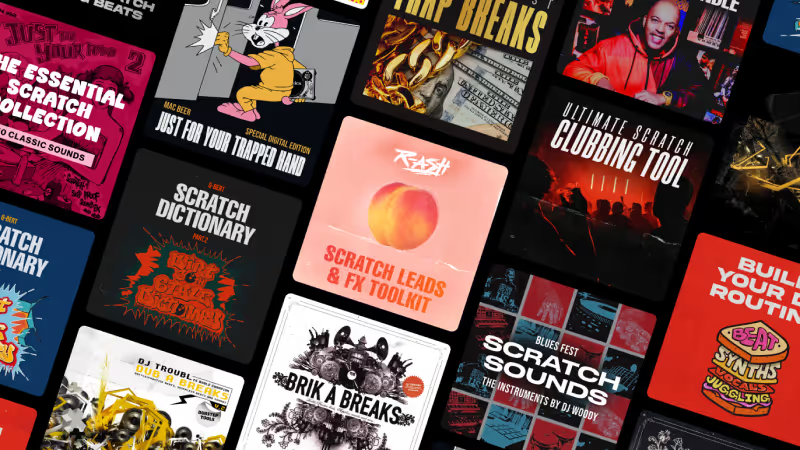
Download 100 classic scratch sounds every DJ should have, a must-have pack for every turntablist.
Perfect for daily practice, battle routines, or just sparking new inspiration. Oh, and yes, it’s totally free!
And of course, if you’re looking for more content like this, you can also check out The DJ Store, a platform packed with exclusive, premium digital DJ sound packs.
The baby scratch is where it all begins. This fundamental technique involves simply moving the record back and forth without using the crossfader. While it may seem basic, it's the core of almost every advanced scratch.
The chirp scratch is a step up from the baby scratch and introduces the use of the crossfader. It involves making quick, sharp cuts by closing the fader as you push the record forward and opening it as you pull it back. The result? A crisp "chirping" sound that adds sharpness and groove to your scratches.
The stab scratch may look straightforward, but don’t be fooled, it takes precision and control to execute it cleanly. This technique involves quickly pushing the record forward while simultaneously cutting the sound on and off with the crossfader. The goal is to create a sharp, percussive sound, almost like a drum hit.
The Transformer scratch is one of the most iconic scratching techniques, deeply rooted in the golden era of turntablism. It was popularized in the 1980s by DJ Spinbad and DJ Cash Money, who used it in battle routines to create a robotic, stuttering effect, reminiscent of the sound effects from the Transformers cartoon, which inspired the name.
This technique involves moving the record back and forth while rapidly toggling the crossfader on and off. The key is to maintain a steady rhythm with the fader cuts, allowing you to create dynamic, rhythmic chops that mimic a vocal being "transformed" into sound fragments.
Mastering this technique will give your scratching an old-school battle feel while preparing you for faster and more intricate fader work. It’s a must-have in any DJ’s toolkit! 🎧🔥
The Flare scratch revolutionized turntablism when it was introduced in the late 1980s by DJ Flare (hence the name) and later refined by legends like DJ Qbert and the Invisibl Skratch Piklz. This technique broke the traditional rules of crossfader control, introducing a new way to create multiple sound bursts in a single record movement, paving the way for modern scratch styles.
Unlike traditional scratches where the fader is fully opened and closed, the Flare technique briefly opens the crossfader mid-movement, creating crisp, rhythmic cuts. The result is a smooth, fast, and versatile scratch that allows for intricate patterns and combinations.
The Flare scratch opened the door to countless new techniques and remains a must-learn for any serious turntablist. Once you master it, you’ll unlock a whole new world of creative scratching! 🎧🔥

Lorem ipsum dolor sit amet, consectetur adipiscing elit. Suspendisse varius enim in eros elementum tristique. Duis cursus, mi quis viverra ornare, eros dolor interdum nulla, ut commodo diam libero vitae erat. Aenean faucibus nibh et justo cursus id rutrum lorem imperdiet. Nunc ut sem vitae risus tristique posuere.
Be notified when new content is out! Subscribe to our newsletter to receive exclusive content straight into your inbox.



Final Thoughts: master the fundamentals and get creative
Mastering these five techniques will give you a solid foundation to build upon, whether you're battling, performing live, or just having fun in your practice sessions.
🔥 Next Steps: Watch tutorials, practice consistently, and experiment with different scratch combos to develop your own unique style. The more you scratch, the better you'll get!
Enjoyed this article? Don’t stop here, in Part 2, we dive even deeper into advanced scratching patterns and creative combos!